
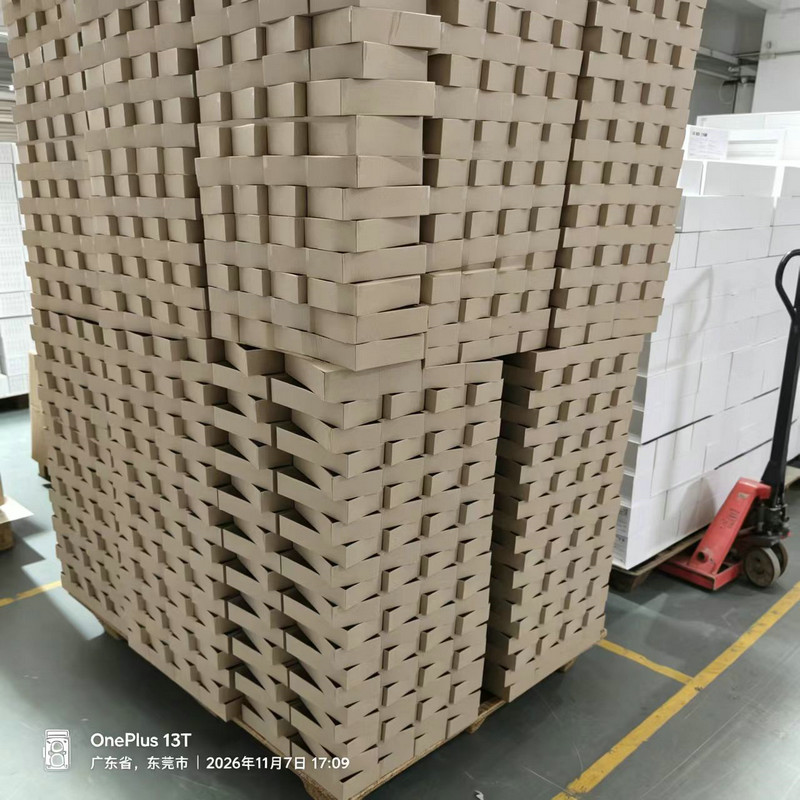
The short answer: pick the box around your product, not the other way round. Measure your best seller, choose a flute and a box style that match its weight and fragility, size the box snug so it ships without excess void fill, and print your brand on it. Order a sample first, then place the bulk order. This guide walks through each step so you can brief a supplier with confidence.
This article is for you if you run an e-commerce brand and your products ship in boxes you did not design yourself. It is not for you if you only need plain stock cartons for warehouse storage — a stock carton will do that job more cheaply.
Why the box deserves more thought than it usually gets
A box is the only part of your product your customer touches before they touch the product. When it arrives crushed, damp, or split at the seams, the customer judges the brand inside it — not the courier. Damaged parcels come back as returns, bad reviews, and repeat shipments that cost you twice.
A box that fits well does three jobs at once: it protects the product in transit, it cuts down on void fill and dimensional weight, and it turns the unboxing into a moment that feels like your brand. None of that needs a luxury budget. It needs the right box, sized right, for the product that actually ships in it.
Step 1: Start with the product, not the box
Before you talk to any supplier, write down four things about the product that will ship in the box: Dimensions — length, width, and height of the product itself, in millimetres. Weight — the product plus anything that ships with it, such as inserts or a thank-you card. Fragility — is it glass, ceramic, or electronics, or is it soft goods that can take a knock? Quantity per box — one item per parcel, or a set?
These four answers decide almost everything else. A heavy glass bottle needs a stronger board and a snugger fit than a folded T-shirt, and a set of three jars needs internal dividers or a different box style altogether. If you cannot answer these four questions yet, measure your best seller first — it is the product that will teach you the most, because it ships the most.
Step 2: Pick the right flute
Corrugated board is made of a wavy inner layer — the flute — sandwiched between flat liner sheets. The flute profile sets the balance between strength and print quality: B flute is thin and crush-resistant, with a smooth surface that prints well. A common choice for retail-ready mailer boxes. C flute is thicker and stronger, the workhorse for shipping heavier items. E flute is the thinnest, with the smoothest print surface — good for small, light, premium-feeling boxes. Double-wall board (two flutes combined) is for heavy or fragile goods that single-wall board cannot protect.
As a rule of thumb: light, premium products lean toward B or E flute; heavier products lean toward C flute or double-wall. When in doubt, tell your supplier the product weight and let them recommend the board — but ask them to name the flute and the board grade in the quote, so you can compare suppliers on the same basis.
Step 3: Pick a box style that fits how you ship
The two styles most e-commerce brands use are: Mailer boxes (die-cut, self-locking, no tape needed). They open like a gift box, so they are the natural choice when the unboxing matters — skincare, cosmetics, gifts, and subscription boxes. They cost more per unit than a plain shipping carton, but they arrive looking like your brand. Regular slotted cartons (RSC) — the standard taped shipping box. Cheaper, stronger for heavy goods, and the right choice when the box is purely protective and the product inside carries the brand experience.
If your product is fragile, ask about inserts or dividers — a die-cut insert that holds each item in place protects better than loose void fill, and it looks better when the customer opens the box. Decide the style before you ask for a price: the same dimensions in a mailer box and an RSC carton are two different quotes.
Step 4: Size it snug — measure twice
The most common sizing mistake is ordering a box that is bigger than the product “to be safe.” An oversized box needs more void fill, costs more to ship, and lets the product rattle around and break. A box that is too tight is worse — it crushes the product or splits at the seams.
Measure the product, add just enough room for protective material (usually a few millimetres on each side for light goods, more for fragile ones), and give the supplier the inside dimensions of the box you need. If you only have the outside dimensions of your current box, say so — a good supplier will convert them. And always check the size with a sample before the bulk order: a 5 mm error across a thousand boxes is a thousand wrong boxes.
Step 5: Print your brand on it
A plain brown box ships the product. A printed box ships the brand. Full-colour custom printing lets you put your logo, brand colours, and message on the outside — and on the inside, where the customer actually looks when they open it.
Keep the artwork simple: logo, one or two brand colours, and at most one short line of text. Fine detail and small text do not survive corrugated board well, so test the print on a sample. If you are ordering for the first time, ask the supplier for a printed sample of your actual artwork, not a blank sample — colour and registration are the things you need to see before you commit.
Step 6: Order smart — samples first, then bulk
Custom boxes are made to order, so the ordering rhythm matters: Start with a sample. A sample run confirms the size, the board, the print, and the way the box folds and locks. At Youmtech, samples take 6 days. Confirm the minimum order. Custom printed boxes are typically made in runs of 500 pieces and up — that is our minimum order quantity. Plan the bulk lead time. Once the sample is approved, bulk production takes 20 days. Order before you run out, not after: a stock-out costs more in lost sales than an early order costs in storage.
When you ask for a quote, send the supplier four things: the product dimensions and weight, the box style you want, the quantity, and your artwork. That is enough for an accurate price — and it is the fastest way to find out whether a supplier can actually make what you need.
Mistakes to avoid
Ordering by price alone. The cheapest quote often means thinner board or a bigger box. Compare flute, board grade, dimensions, and print on the same basis. Skipping the sample. A sample is the cheapest insurance in the whole order. Designing the box before measuring the product. The product decides the box, not the other way round. Forgetting the inside. The inside of the lid is free advertising space — a thank-you message or a QR code costs nothing extra to print.
Your next step
Measure your best seller — its dimensions, its weight, and the size of the box it ships in today. Then send those numbers to a packaging supplier and ask for a quote on that exact box, with a printed sample first. That one email tells you the price, the lead time, and whether the supplier understands your product.
If you would like a quote from us, send your product dimensions and quantity through the contact form on this site. We make custom printed corrugated boxes in Changping, Dongguan — minimum order 500 pieces, samples in 6 days, bulk orders in 20 days.